Rhonda Witwer, Witwer Works04.01.15
Carbohydrates will be in the news for their health effects for the indefinite future. We have already cycled through low carb diets, “net” carbs, Glycemic Index and now the Paleolithic Diet, to name a few. While dietary fiber remains a mainstay nutrient, high fiber foods have not exactly been flying off the shelf. These trends come and go, but one thing is clear: we need to understand carbohydrate metabolism and how we as food and dietary supplement professionals can ride these trends.
Carbohydrates are a valuable part of our diet. They cannot simply be excluded without a considerable amount of effort and health consequences. We have always known they are a major source of energy as glucose, but new research is showing that carbohydrates have a major role in both sugar and fat metabolism.
Carbohydrate metabolism is far more complicated than the release of glucose as energy. Research with one particular type of dietary fiber—unmodified resistant starch—is proving the importance of large intestinal fermentation to metabolism via insulin sensitivity than anyone had previously theorized.
Background
Managing blood sugar is crucial for life. Losing blood sugar control can have tragic consequences—including blindness, amputation, heart disease, loss of kidney function, dementia and numerous other quality of life losses.
More often, discussions regarding the metabolic effects of carbohydrates are broken down into two chapters: digestibility and release of blood sugar in the small intestine and dietary fiber within the large intestine. It is as if there is a wall of separation between blood sugar and small intestinal effects and the large intestinal effects. For years now, we have seen one industry article focus on the release of glucose from foods (i.e., Glycemic Index, “net” carbs), while the next month’s article will focus on the advantage of fortifying with dietary fiber. A more holistic approach is needed.
The Role of Foods with Lower Glycemic Response
We typically think of sugar consumption when we consider blood sugar management. For instance, if we eat less sugar, we will have better blood sugar levels, right? This follows last decade’s logic that we should eat less fat so we will have less body fat. This advice did not turn out to be exactly right, given our current knowledge about health promoting fats like omega-3 and olive oil.
Along the same line, we posit that if we eat foods that contain fewer glycemic carbohydrates, we will have healthier blood sugar levels.
However, here is the reality. Eating fewer glycemic carbohydrates will cause less sugar to be circulating in the blood from that particular meal. There is evidence that consistently eating low glycemic foods helps to maintain healthy blood sugar levels over the course of a lifetime. As we already know, food formulators have replaced high glycemic carbohydrates with lower glycemic alternatives for quite some time: alternative sweeteners and sugar alcohols have replaced sugar, while protein and fibers have replaced flour.
However, lowering the glycemic response of one meal will not change the metabolism or the way the body manages blood glucose over the short run. The primary benefits are applicable to that one meal. To use a sports analogy: this is a base hit in the first game of the pee wee baseball season if we are young. It is helpful over the long run, but it takes a consistent hitting average, game after game, day after day, to stay in the game and become a champion in blood sugar management.
The Microbiome & Blood Sugar Management
A broader approach views the digestion process more holistically. Surprisingly, the bacteria in the gut also play a strong role in glucose metabolism.
Over the past decade, there has been a growing awareness that bacteria and other organisms that live in our gut —called the microbiome—are important. In addition to diet and exercise, certain gut bacteria are correlated with, and potentially contribute to, numerous health conditions.[i] What we eat significantly changes the composition of the microbiome, as bacteria consume almost everything that ends up in the large intestine (dietary fiber, resistant protein, fat, etc.).
Thousands of researchers around the world are trying to unravel the relationships not only between the microbiome and health conditions—particularly in the areas of obesity, inflammation and diabetes—but also between dietary components and the microbiome. But since there are thousands of different bacteria species and other organisms that live in our gut, and our dietary consumption varies around the world, this is no easy task. Super-computers are working overtime crunching through the correlations and variations.
A number of researchers have been examining one particular type of fiber—natural and unmodified resistant starch. Their research has shown that eating unmodified resistant starch changes the composition of the microbiome within the large intestine and actually improves how the entire body metabolizes glucose and manages blood sugar. It consistently increases Ruminococcus bromii, among other types of bacteria.[ii] It also results in shifts in the profile of short-chain fatty acids produced by the bacteria.
These massive shifts in bacteria and fatty acid levels change the expression of hundreds of genes within the intestinal tract: some genes are turned on while others are turned off.[iii],[iv] It is not clear which exact biomarker or combination of biomarkers is responsible for changes in the gene expression, as there is a lot happening in the intestinal soup. It is not like there is one pathway to target—there are literally thousands of pathways being impacted with the changes in the intestinal food.
As expected, some of these genes are linked to proper gastrointestinal function. Surprisingly, some of these genes change sugar metabolism. These mechanisms have not been previously understood and researchers are busy trying to identify the actual triggers and pathways involved. It’s as if gut bacteria are the pinch hitters that step in at every meal, whether you eat low glycemic foods or not. They change sugar metabolism, for good or for bad, whether we are aware of it or not.
Insulin is THE Biomarker for Sugar Metabolism
Insulin sensitivity is a recognized biomarker for type 2 diabetes. Insulin tells the body’s tissues to move glucose (sugar) out of the blood and into the muscle and tissues, where it is used as energy or stored.
When we are young and metabolically very healthy, our tissues respond very quickly to insulin. Over time, as we age and/or our bodies repeatedly respond to rapid and high levels of glucose, the tissues can become less sensitive to insulin, and respond less quickly to transporting glucose. When this happens, the glucose stays in the blood longer and the pancreas produces more insulin until glucose levels fall. With enough insulin, blood sugar levels return to normal.
We do not feel differently, but increased insulin is the start of the decline of glycemic health. It may be 10 or 15 years before we discover that we have been losing insulin sensitivity. If someone has a higher genetic predisposition, it could happen much faster.
As insulin levels rise and prediabetes develops, the pancreas may eventually stop producing enough insulin to effectively control glucose levels in the blood. At that point in time, glucose levels stay higher for longer after eating. When blood levels start to stay higher after meals, it starts showing up in typical medical screening.
According to the American Diabetes Association, the threshold for normal, healthy metabolism of glucose is less than 100 mg/dl at fasting and less than 140 mg/dl two hours after eating. If glucose is between 100-126 mg/dl at fasting and 140-200 mg/dl two hours after eating, that person is considered pre-diabetic. Only when the person consistently has more than 126 mg/dl of glucose in their blood when fasted and more than 200 mg/dl of glucose in their blood two hours after eating are they classified as a Type 2 diabetic.
Unmodified Resistant Starch & Insulin
Consumption of unmodified resistant starch increases insulin sensitivity very quickly. It lowers the amount of insulin needed to manage glucose, so it effectively lowers the amount of insulin circulating in the blood. This has tremendous implications, because insulin is also a major driver for fat storage and weight.
Resistant starch improves insulin sensitivity in healthy people at very high doses,[v], [vi] but not at lower doses.[vii] More importantly, it improves insulin sensitivity in people who have higher insulin levels than normal (indicating they have lost insulin sensitivity; they are categorized as prediabetic). Fortunately, this population needs improved insulin sensitivity the most.
According to the Centers for Disease Control, one out of three American adults have this condition.[viii] Two clinical studies have shown 30-50% improvements in insulin sensitivity among men and women who have lower insulin sensitivity and higher insulin levels in their blood when consuming 15-30 grams of unmodified resistant starch/day.[ix], [x] This is not a trivial level of improvement; it is a breakthrough in blood sugar health.
This is How Your Body is Supposed to Work
Starch is found naturally in foods, especially the kind of foods that children, adolescents and adults consume, because starch is the plants’ primary energy-storage vehicle. It has been estimated that up to 10% of the starch we eat is actually “resistant starch,” meaning that it resists digestion, and reaches the large intestine, where it becomes food for intestinal bacteria.
Processed foods typically contain smaller amounts of resistant starch, as processing typically degrades the protective barriers and makes food softer and more digestible. For example, chewing reduces the particle size of foods, which increases the digestibility and reduces the resistant starch content. Raw potatoes are an excellent example. Raw potato starch is very rich in resistant starch, but once cooked and eaten hot, all of the starch becomes rapidly digestible and high glycemic.
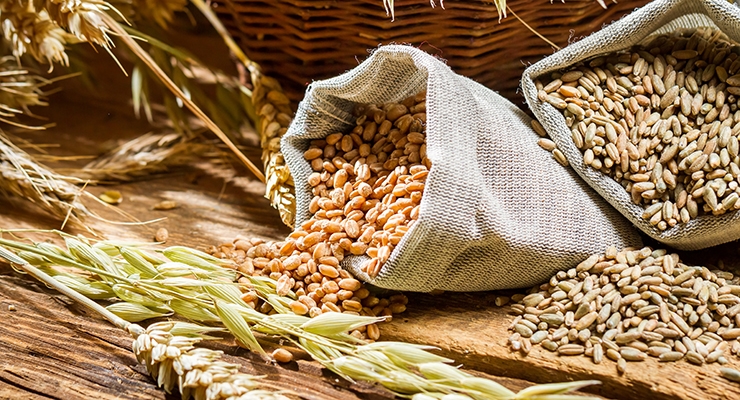
Whole grains also have a higher level of resistant starch, but once they are milled into flour or whole grain flour, the seed or husk—which protected the starch from digestion—is no longer protective, and the resistant starch is lost. Intact whole grain wheat contains about 14% resistant starch, but wheat flour only 2%.[xi] The milled seed or husk may still be in the flour, but if it does not protect the starch contents, it does not slow down the digestive process and the starch becomes rapidly digestible.
Not All Fibers Impact Sugar Metabolism
Different fibers have different physiological effects. The Calorie Control Council’s website FiberFacts.org does a great job of explaining the differences. In short, there are three primary mechanisms of dietary fiber: bulking, viscosity and fermentation. Different fibers contribute different elements to staying healthy.
Some fibers are minimally fermented; they help promote regularity by holding a lot of water. Their primary effect is bulking, but it may take many months of consumption before the microbiome begins to change. In contrast, the microbiome composition changes after only one meal containing fermentable fiber.
Other fibers are partially fermented. For instance, resistant maltodextrin is about half fermented and half excreted. When this particular fiber is utilized, calories are definitely reduced, but the potential fermentation-related benefits are halved.
Some fibers are fermented, but change the microbiome in different ways. Inulin and fructooligosaccharides are well known for increasing Bifidobacteria, but the health effect of this organism for adults is unclear, as shown by the 2011 EFSA opinion.[xii] And chemical structure matters in fermentation: modified resistant wheat starch does not increase Ruminococcus bromii but it increases other types of bacteria instead.[xiii]
In short, different pathways may be triggered with different fermentation patterns within the intestinal soup. Intestinal fermentation is still a large black box with many unknowns.
In Conclusion
Regardless of the pathways and the hormones involved, eating unmodified resistant starch helps manage glucose from any foods or snacks throughout the day. When it substitutes for flour, it reduces the glycemic response of that particular food, but more importantly, it improves insulin sensitivity, a major biomarker for sugar metabolism.
Increasing insulin sensitivity is the homerun in the championship series of glycemic management. You do not have to wait for years to see if there are glycemic benefits; you get them within a few hours and it keeps working for a number of days.
The good news for food and supplement manufacturers is that it does not matter how people eat resistant starch—it does not even have to be eaten as part of a low glycemic meal. Improved insulin sensitivity has been shown when people eat unmodified resistant starch as a supplement or as a food. It can be mixed into foods like yogurt or oatmeal, or blended into a smoothie. It can also invisibly replace flour in carbohydrate-rich foods such as crackers or bagels, which has the double advantage of delivering resistant starch and lowering the glycemic response of that food.
Consumers care about the quality and type of carbohydrates they eat. As a bland-tasting white powder, unmodified resistant starch is an ideal type of dietary fiber for delivering blood sugar health by improving insulin sensitivity.
Rhonda S. Witwer is founder of Witwer Works, a consulting firm specializing in carbohydrate nutrition. With more than 20 years of experience in nutritional and functional foods, Witwer Works brings creative solutions for the future of carbohydrate-rich foods. She can be reached at: rhondawitwer@gmail.com. Follow her on Twitter @RhondaWitwer.
References
[i] S. Fang and R. M. Evans, "Wealth Management in the Gut," Nature 500, (2013).
Carbohydrates are a valuable part of our diet. They cannot simply be excluded without a considerable amount of effort and health consequences. We have always known they are a major source of energy as glucose, but new research is showing that carbohydrates have a major role in both sugar and fat metabolism.
Carbohydrate metabolism is far more complicated than the release of glucose as energy. Research with one particular type of dietary fiber—unmodified resistant starch—is proving the importance of large intestinal fermentation to metabolism via insulin sensitivity than anyone had previously theorized.
Background
Managing blood sugar is crucial for life. Losing blood sugar control can have tragic consequences—including blindness, amputation, heart disease, loss of kidney function, dementia and numerous other quality of life losses.
More often, discussions regarding the metabolic effects of carbohydrates are broken down into two chapters: digestibility and release of blood sugar in the small intestine and dietary fiber within the large intestine. It is as if there is a wall of separation between blood sugar and small intestinal effects and the large intestinal effects. For years now, we have seen one industry article focus on the release of glucose from foods (i.e., Glycemic Index, “net” carbs), while the next month’s article will focus on the advantage of fortifying with dietary fiber. A more holistic approach is needed.
The Role of Foods with Lower Glycemic Response
We typically think of sugar consumption when we consider blood sugar management. For instance, if we eat less sugar, we will have better blood sugar levels, right? This follows last decade’s logic that we should eat less fat so we will have less body fat. This advice did not turn out to be exactly right, given our current knowledge about health promoting fats like omega-3 and olive oil.
Along the same line, we posit that if we eat foods that contain fewer glycemic carbohydrates, we will have healthier blood sugar levels.
However, here is the reality. Eating fewer glycemic carbohydrates will cause less sugar to be circulating in the blood from that particular meal. There is evidence that consistently eating low glycemic foods helps to maintain healthy blood sugar levels over the course of a lifetime. As we already know, food formulators have replaced high glycemic carbohydrates with lower glycemic alternatives for quite some time: alternative sweeteners and sugar alcohols have replaced sugar, while protein and fibers have replaced flour.
However, lowering the glycemic response of one meal will not change the metabolism or the way the body manages blood glucose over the short run. The primary benefits are applicable to that one meal. To use a sports analogy: this is a base hit in the first game of the pee wee baseball season if we are young. It is helpful over the long run, but it takes a consistent hitting average, game after game, day after day, to stay in the game and become a champion in blood sugar management.
The Microbiome & Blood Sugar Management
A broader approach views the digestion process more holistically. Surprisingly, the bacteria in the gut also play a strong role in glucose metabolism.
Over the past decade, there has been a growing awareness that bacteria and other organisms that live in our gut —called the microbiome—are important. In addition to diet and exercise, certain gut bacteria are correlated with, and potentially contribute to, numerous health conditions.[i] What we eat significantly changes the composition of the microbiome, as bacteria consume almost everything that ends up in the large intestine (dietary fiber, resistant protein, fat, etc.).
Thousands of researchers around the world are trying to unravel the relationships not only between the microbiome and health conditions—particularly in the areas of obesity, inflammation and diabetes—but also between dietary components and the microbiome. But since there are thousands of different bacteria species and other organisms that live in our gut, and our dietary consumption varies around the world, this is no easy task. Super-computers are working overtime crunching through the correlations and variations.
A number of researchers have been examining one particular type of fiber—natural and unmodified resistant starch. Their research has shown that eating unmodified resistant starch changes the composition of the microbiome within the large intestine and actually improves how the entire body metabolizes glucose and manages blood sugar. It consistently increases Ruminococcus bromii, among other types of bacteria.[ii] It also results in shifts in the profile of short-chain fatty acids produced by the bacteria.
These massive shifts in bacteria and fatty acid levels change the expression of hundreds of genes within the intestinal tract: some genes are turned on while others are turned off.[iii],[iv] It is not clear which exact biomarker or combination of biomarkers is responsible for changes in the gene expression, as there is a lot happening in the intestinal soup. It is not like there is one pathway to target—there are literally thousands of pathways being impacted with the changes in the intestinal food.
As expected, some of these genes are linked to proper gastrointestinal function. Surprisingly, some of these genes change sugar metabolism. These mechanisms have not been previously understood and researchers are busy trying to identify the actual triggers and pathways involved. It’s as if gut bacteria are the pinch hitters that step in at every meal, whether you eat low glycemic foods or not. They change sugar metabolism, for good or for bad, whether we are aware of it or not.
Insulin is THE Biomarker for Sugar Metabolism
Insulin sensitivity is a recognized biomarker for type 2 diabetes. Insulin tells the body’s tissues to move glucose (sugar) out of the blood and into the muscle and tissues, where it is used as energy or stored.
When we are young and metabolically very healthy, our tissues respond very quickly to insulin. Over time, as we age and/or our bodies repeatedly respond to rapid and high levels of glucose, the tissues can become less sensitive to insulin, and respond less quickly to transporting glucose. When this happens, the glucose stays in the blood longer and the pancreas produces more insulin until glucose levels fall. With enough insulin, blood sugar levels return to normal.
We do not feel differently, but increased insulin is the start of the decline of glycemic health. It may be 10 or 15 years before we discover that we have been losing insulin sensitivity. If someone has a higher genetic predisposition, it could happen much faster.
As insulin levels rise and prediabetes develops, the pancreas may eventually stop producing enough insulin to effectively control glucose levels in the blood. At that point in time, glucose levels stay higher for longer after eating. When blood levels start to stay higher after meals, it starts showing up in typical medical screening.
According to the American Diabetes Association, the threshold for normal, healthy metabolism of glucose is less than 100 mg/dl at fasting and less than 140 mg/dl two hours after eating. If glucose is between 100-126 mg/dl at fasting and 140-200 mg/dl two hours after eating, that person is considered pre-diabetic. Only when the person consistently has more than 126 mg/dl of glucose in their blood when fasted and more than 200 mg/dl of glucose in their blood two hours after eating are they classified as a Type 2 diabetic.
Unmodified Resistant Starch & Insulin
Consumption of unmodified resistant starch increases insulin sensitivity very quickly. It lowers the amount of insulin needed to manage glucose, so it effectively lowers the amount of insulin circulating in the blood. This has tremendous implications, because insulin is also a major driver for fat storage and weight.
Resistant starch improves insulin sensitivity in healthy people at very high doses,[v], [vi] but not at lower doses.[vii] More importantly, it improves insulin sensitivity in people who have higher insulin levels than normal (indicating they have lost insulin sensitivity; they are categorized as prediabetic). Fortunately, this population needs improved insulin sensitivity the most.
According to the Centers for Disease Control, one out of three American adults have this condition.[viii] Two clinical studies have shown 30-50% improvements in insulin sensitivity among men and women who have lower insulin sensitivity and higher insulin levels in their blood when consuming 15-30 grams of unmodified resistant starch/day.[ix], [x] This is not a trivial level of improvement; it is a breakthrough in blood sugar health.
This is How Your Body is Supposed to Work
Starch is found naturally in foods, especially the kind of foods that children, adolescents and adults consume, because starch is the plants’ primary energy-storage vehicle. It has been estimated that up to 10% of the starch we eat is actually “resistant starch,” meaning that it resists digestion, and reaches the large intestine, where it becomes food for intestinal bacteria.
Processed foods typically contain smaller amounts of resistant starch, as processing typically degrades the protective barriers and makes food softer and more digestible. For example, chewing reduces the particle size of foods, which increases the digestibility and reduces the resistant starch content. Raw potatoes are an excellent example. Raw potato starch is very rich in resistant starch, but once cooked and eaten hot, all of the starch becomes rapidly digestible and high glycemic.
Whole grains also have a higher level of resistant starch, but once they are milled into flour or whole grain flour, the seed or husk—which protected the starch from digestion—is no longer protective, and the resistant starch is lost. Intact whole grain wheat contains about 14% resistant starch, but wheat flour only 2%.[xi] The milled seed or husk may still be in the flour, but if it does not protect the starch contents, it does not slow down the digestive process and the starch becomes rapidly digestible.
Not All Fibers Impact Sugar Metabolism
Different fibers have different physiological effects. The Calorie Control Council’s website FiberFacts.org does a great job of explaining the differences. In short, there are three primary mechanisms of dietary fiber: bulking, viscosity and fermentation. Different fibers contribute different elements to staying healthy.
Some fibers are minimally fermented; they help promote regularity by holding a lot of water. Their primary effect is bulking, but it may take many months of consumption before the microbiome begins to change. In contrast, the microbiome composition changes after only one meal containing fermentable fiber.
Other fibers are partially fermented. For instance, resistant maltodextrin is about half fermented and half excreted. When this particular fiber is utilized, calories are definitely reduced, but the potential fermentation-related benefits are halved.
Some fibers are fermented, but change the microbiome in different ways. Inulin and fructooligosaccharides are well known for increasing Bifidobacteria, but the health effect of this organism for adults is unclear, as shown by the 2011 EFSA opinion.[xii] And chemical structure matters in fermentation: modified resistant wheat starch does not increase Ruminococcus bromii but it increases other types of bacteria instead.[xiii]
In short, different pathways may be triggered with different fermentation patterns within the intestinal soup. Intestinal fermentation is still a large black box with many unknowns.
In Conclusion
Regardless of the pathways and the hormones involved, eating unmodified resistant starch helps manage glucose from any foods or snacks throughout the day. When it substitutes for flour, it reduces the glycemic response of that particular food, but more importantly, it improves insulin sensitivity, a major biomarker for sugar metabolism.
Increasing insulin sensitivity is the homerun in the championship series of glycemic management. You do not have to wait for years to see if there are glycemic benefits; you get them within a few hours and it keeps working for a number of days.
The good news for food and supplement manufacturers is that it does not matter how people eat resistant starch—it does not even have to be eaten as part of a low glycemic meal. Improved insulin sensitivity has been shown when people eat unmodified resistant starch as a supplement or as a food. It can be mixed into foods like yogurt or oatmeal, or blended into a smoothie. It can also invisibly replace flour in carbohydrate-rich foods such as crackers or bagels, which has the double advantage of delivering resistant starch and lowering the glycemic response of that food.
Consumers care about the quality and type of carbohydrates they eat. As a bland-tasting white powder, unmodified resistant starch is an ideal type of dietary fiber for delivering blood sugar health by improving insulin sensitivity.
Rhonda S. Witwer is founder of Witwer Works, a consulting firm specializing in carbohydrate nutrition. With more than 20 years of experience in nutritional and functional foods, Witwer Works brings creative solutions for the future of carbohydrate-rich foods. She can be reached at: rhondawitwer@gmail.com. Follow her on Twitter @RhondaWitwer.
References
[i] S. Fang and R. M. Evans, "Wealth Management in the Gut," Nature 500, (2013).
[ii] A. W. Walker et al., "Dominant and Diet-Responsive Groups of Bacteria within the Human Colonic Microbiota," ISME J 5, no. 2 (2011).
[iii] Keenan MJ, et al., High-amylose resistant starch increases hormones and improves structure and function of the gastrointestinal tract: a microarray study. J Nutrigenet Nutrigenomics, 2012; 5:26–44. DOI: 10.1159/000335319. Published online April 20, 2012.
[iv] Z. Zhou et al., "Resistant Starch Manipulated Hyperglycemia/Hyperlipidemia and Related Genes Expression in Diabetic Rats," Int J Biol Macromol 75, no. April (2015).
[v] M. D. Robertson et al., "Prior Short-Term Consumption of Resistant Starch Enhances Postprandial Insulin Sensitivity in Healthy Subjects," Diabetologia 46, no. 5 (2003).
[vi] M. D. Robertson et al., "Insulin-Sensitizing Effects of Dietary Resistant Starch and Effects on Skeletal Muscle and Adipose Tissue Metabolism," Am J Clin Nutr 82, no. 3 (2005).
[vii] M. Penn-Marshall, G. I. Holtzman, and W. E. Barbeau, "African Americans May Have to Consume More Than 12 Grams a Day of Resistant Starch to Lower Their Risk for Type 2 Diabetes," J Med Food 13, no. 4 (2010).
[viii] http://www.cdc.gov/diabetes/pubs/statsreport14/prediabetes-infographic.pdf
[ix] Kevin C. Maki et al., "Resistant Starch from High-Amylose Maize Increases Insulin Sensitivity in Overweight and Obese Men," J Nutr 142, no. 4 (2012).
[x] B. Gower et al., "Beneficial Effects of High-Amylose Maize Resistant Starch (Ham-Rs2) in Insulin-Resistant Women," inObesity (Boston, MA: 2014).
[xi] G. E. Bednar et al., "Starch and Fiber Fractions in Selected Food and Feed Ingredients Affect Their Small Intestinal Digestibility and Fermentability and Their Large Bowel Fermentability in Vitro in a Canine Model," J Nutr 131, no. 2 (2001).
[xii] http://www.efsa.europa.eu/en/efsajournal/doc/2023.pdf.
[xiii] I. Martínez et al., "Resistant Starches Types 2 and 4 Have Differential Effects on the Composition of the Fecal Microbiota in Human Subjects," PLoS ONE 5, no. 11 (2010).