Todd Harrison and Michelle Jackson, Venable04.01.16
Considered a subset of animal feed under FDA regulations, dietary supplements for animals are regulated by FDA’s Center for Veterinary Medicine (CVM) in cooperation with state and local authorities. CVM partners particularly closely with the Association of American Feed Control Officials (AAFCO). The use of animal feed, like human food, is governed by the federal Food, Drug, and Cosmetic Act (FDCA).
General Policy on Pet Supplements
CVM generally takes the position that animals on balanced rations, such as companion animals (i.e., dogs, cats and horses), do not require extra nutritional supplementation beyond their typical feed. This is because CVM believes that dog and cat foods are rich in nutrients and that most animals either receive adequate amounts of vitamins, minerals, protein (essential amino acids), fat (fatty acids) and carbohydrates from their diet or are able to synthesize them from a ration balanced to observe National Research Council nutrient requirements. (See FDA’s Compliance Policy Guide (CPG) Section 690.100, Nutritional Supplements for Companion Animals.)
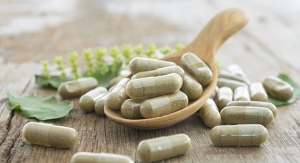
Nevertheless, CVM generally does not object to the over-the-counter marketing of dietary supplements in tablet, capsule, powder or liquid form for companion animals similar to dietary supplements marketed to humans. However, CVM takes the position that such products should provide meaningful amounts of each of the nutrients they are represented to contain and that the nutrients should be of known value for the intended or target animal.
FDA uses the Nutritional Requirements of Domestic Animals, a standard test published by the National Academy of Sciences, National Research Council (NAS/NRC), to arrive at a level of supplementation that represents the best information presently available. FDA typically accepts as adequate those products providing a meaningful level of nutrition when compared with the NAS/NRC recommendations.
FDA Restrictions
Generally, the Center for Veterinary Medicine will not object to the marketing of nutritional supplements for oral administration to companion animals provided they conform to the following restrictions:
As you are likely aware, in 1994 Congress passed the Dietary Supplement Health and Education Act (DSHEA), which defines a dietary supplement as a product intended to supplement the diet and that contains at least one or more of the following ingredients: a vitamin; a mineral; an herb or other botanical; an amino acid; a dietary substance for use to supplement the diet by increasing total dietary intake; or a concentrate, metabolite, constituent, extract or combination of any of the previously mentioned ingredients. The main effect of DSHEA was to remove certain dietary ingredients from regulation as food additives, which requires premarket approval.
However, in 1996, CVM announced that DSHEA does not apply to animal products. Thus, many substances that are permitted in human dietary supplements may not be legally sold in animal supplements.
In announcing that DSHEA does not apply to animal products, CVM reasoned that many substances that qualify as dietary supplements for human consumption, such as botanicals, have a history of use in humans that can be used to establish reasonably safe levels. However, the same is not true for many of the same ingredients in animals. Animals may react very differently to substances than humans, and even small doses can cause adverse effects. Moreover, each animal species requires different nutrients, absorbs and metabolizes nutrients differently, and can exhibit different toxic reactions to food and its components.
In general, the FDCA requires that animal feed be pure and wholesome, contain no harmful or deleterious substances, and be truthfully labeled. Currently, only those substances that are 1) listed as Generally Recognized As Safe (GRAS) in FDA regulations at 21 C.F.R. Part 582; 2) listed as an approved food additive in FDA regulations at 21 C.F.R. Part 573; or 3) listed as a defined ingredient in the Official Publication of the Association of American Feed Control Officials (the AAFCO book) are permitted in animal feed, including animal/pet supplements that are being sold as feed.
However, it is unclear how long the agency will continue to recognize the definitions in the AAFCO Official Publication (OP). In a Memorandum of Understanding entered into in 2007 and renewed in March 2015, FDA and AAFCO agreed to collaborate in the development and approval of animal feed ingredient definitions.
However, also in March 2015, FDA announced its intention to bring the AAFCO ingredient definition and standards completely under the FDA GRAS and food additive framework.
Specifically, the agency intends to (re)-evaluate all feed ingredients that appear in the AAFCO OP but are not listed in FDA regulations as GRAS or approved as food additives. FDA intends to determine whether there is sufficient scientific evidence to affirm the ingredient as GRAS or approve it as a food additive. When there is not sufficient evidence available for FDA to make a GRAS or food additive determination, the agency intends to require companies to submit food additive petitions in order to continue using an ingredient in animal feed products. Thus, while an ingredient might currently be permitted due to its listing in the AAFCO book, companies should understand that the permissibility of the ingredient is subject to change in the near future.
With the above standard in mind, many unapproved ingredients are currently marketed for use in animal supplements, including burdock, echinacea, ginseng, horsetail and nettles. Currently, none of these ingredients are permitted for use in pet supplements.
Claims in Question
Because CVM has determined that DSHEA does not apply to animal supplements, many claims that are permitted for human dietary supplements are not permitted for animal supplements. The courts have interpreted “food” as a substance that provides nutrition, taste or aroma. Thus, claims on animal feed products (including animal supplements) that establish the intended use of the product to affect the structure or function of the body of animals in a manner other than via nutrition, aroma or taste causes the product to be a drug.
Accordingly, CVM categorizes ingredients in animal supplements as one of two types: 1) a nutritional ingredient (intended to provide nutrition), or 2) a non-nutritive ingredient (does not provide nutrition). The AAFCO Official Publication contains nutrient profiles for cats and dogs that list the ingredients considered to be essential nutritive ingredients. According to CVM, a claim that an animal supplement affects the structure or function of the body based on its nutritive value (a nutritional ingredient) is considered a food claim, and the product will be categorized as a food. For example, calcium is listed as an essential nutritive ingredient in the AAFCO OP for both dogs and cats. Thus, a claim that a supplement that contains dried milk provides calcium to support proper bone structure would be a permitted food claim, and the supplement would be categorized as a food.
Conversely, a claim that an animal supplement affects the structure or function of the body apart from its nutritive value (a non-nutritive ingredient) is considered a drug claim, and the product will be categorized as a drug. For example, glucosamine is not listed as an essential nutritive ingredient in the AAFCO Official Publication for either dogs or cats. Thus, a claim that a pet supplement helps to improve joint function based on glucosamine in the product would be a drug claim, and the supplement would be considered a drug.
Moreover, claims for 1) improved or increased production and performance, 2) alteration or improvement in function, or 3) treatment or prevention of disease are also considered drug claims, regardless of whether the ingredient is nutritive or non-nutritive. FDA has explicitly stated that pet supplements should not “bear such vague therapeutic suggestions as promotion of ‘health,’ ‘stamina,’ ‘strength,’ or that they are of any special value for breeding purposes or for show or racing purposes or for working animals, or that by virtue of their formulation [i.e., ‘chelated,’ ‘timed release,’ ‘natural’] they are superior to the ordinary vitamin-mineral preparations of commerce.” (See FDA’s CPG Section 690.100.) Likewise, direct or implied representations for the product as a tonic, conditioner or toner are considered drug claims (21 C.F.R. § 500.52).
On a case-by-case basis, CVM has permitted some exceptions and agreed to exercise regulatory discretion for certain references to “nutritional support” for specific organs or body functions. For instance, CVM has explained that it would not object to a claim that vitamin E serves as an antioxidant in the body of animals.
Claims for Probiotics
FDA has issued a special Compliance Policy Guide (CPG) related to products that are purported to contain live (viable) microorganisms (bacteria and/or yeast). FDA refers to such products as “direct-fed microbial products (probiotics).” (See FDA’s Compliance Policy Guide Section 689.100, Direct-Fed Microbial Products.) FDA’s Policy is as follows:
In sum, in order to ensure that a pet supplement is legally marketed as an animal feed, each of the ingredients in the pet supplement should be listed in one of the following:
If you choose to market the supplement as a feed, we recommend labeling the product in accordance with FDA requirements and the AAFCO feed labeling guide. We are happy to help you with these requirements. However, not all states have adopted the AAFCO model regulations, and some states have adopted the model regulations with modifications. Accordingly, it is possible that some states may require you to make some changes to the label in the future.
You should also be aware that many states require that animal feed products, including supplements that are sold as feed, be registered with the state before being sold in that state. There is often a minimal annual fee associated with registration. We can provide you with more information on these requirements. Further information can also be found on the AAFCO website (www.aafco.org/publications).
Options for Marketing the Product as a Drug
Another option is to market the product with ingredients that are not included on these three lists, with the knowledge that the product will technically be considered an unapproved new drug. Generally, FDA considers these products to be “drugs of low regulatory priority” (animal supplements are low on FDA’s priority list, and the agency has generally not been active with enforcement actions in this area).
Instead, enforcement is typically handled on the state level, which makes it a state-by-state issue. Some states are much more permissive when it comes to ingredients that are not included on one of the three lists discussed previously. However, there is a chance that one or more states will object to the sale of the product, and those states could ultimately suspend or prohibit the sale of the product in the state. Ultimately, it is a business decision for the company to make depending on how much risk it is willing to take.
If a company intends to market the product as a non-feed or health product, we recommend evaluating whether the product can be marketed as a non-feed supplement under the National Animal Supplement Council (NASC) guidelines. If so, the NASC has published templates for labels for non-feed products. However, it is important to note that some states (such as Ohio) do not recognize the NASC template and will likely require you to comply with the feed regulations in that state. Regardless, we recommend that company’s interested in entering the pet supplement space join NASC as its reputation with FDA and the states is excellent.
If you choose to go the route of a non-feed supplement, you may avoid the requirement to register with many states as an animal feed and may avoid the annual fees associated with the same, however, companies should register as animal remedies in those states with remedy laws.
Todd Harrison
Venable
Todd Harrison is partner with Venable, which is located in Washington, D.C. He advises food and drug companies on a variety of FDA and FTC matters, with an emphasis on dietary supplement, functional food, biotech, legislative, adulteration, labeling and advertising issues. He can be reached at 575 7th St. NW, Washington, D.C. 20004, Tel: 202-344-4724; E-mail: taharrison@venable.com.
Michelle Jackson
Michelle Jackson’s practice is focused on regulatory counseling concerning the development, formulation, manufacture, distribution and promotion of foods, dietary supplements, drugs, medical devices and cosmetics.
General Policy on Pet Supplements
CVM generally takes the position that animals on balanced rations, such as companion animals (i.e., dogs, cats and horses), do not require extra nutritional supplementation beyond their typical feed. This is because CVM believes that dog and cat foods are rich in nutrients and that most animals either receive adequate amounts of vitamins, minerals, protein (essential amino acids), fat (fatty acids) and carbohydrates from their diet or are able to synthesize them from a ration balanced to observe National Research Council nutrient requirements. (See FDA’s Compliance Policy Guide (CPG) Section 690.100, Nutritional Supplements for Companion Animals.)
Nevertheless, CVM generally does not object to the over-the-counter marketing of dietary supplements in tablet, capsule, powder or liquid form for companion animals similar to dietary supplements marketed to humans. However, CVM takes the position that such products should provide meaningful amounts of each of the nutrients they are represented to contain and that the nutrients should be of known value for the intended or target animal.
FDA uses the Nutritional Requirements of Domestic Animals, a standard test published by the National Academy of Sciences, National Research Council (NAS/NRC), to arrive at a level of supplementation that represents the best information presently available. FDA typically accepts as adequate those products providing a meaningful level of nutrition when compared with the NAS/NRC recommendations.
FDA Restrictions
Generally, the Center for Veterinary Medicine will not object to the marketing of nutritional supplements for oral administration to companion animals provided they conform to the following restrictions:
- There is a known need for each nutrient ingredient represented to be in the product for each animal for which the product is intended.
- The label represents the product for use only in supplementation of, and not as a substitute for, good daily rations.
- The product provides a meaningful but not excessive amount of each of the nutrients it is represented to contain.
- The labeling should bear no disease prevention or therapeutic representations, including growth promotion.
- The labeling should not be otherwise false or misleading.
- The product is neither over-potent nor under-potent nor otherwise formulated so as to pose a hazard to the health of the target animal.
As you are likely aware, in 1994 Congress passed the Dietary Supplement Health and Education Act (DSHEA), which defines a dietary supplement as a product intended to supplement the diet and that contains at least one or more of the following ingredients: a vitamin; a mineral; an herb or other botanical; an amino acid; a dietary substance for use to supplement the diet by increasing total dietary intake; or a concentrate, metabolite, constituent, extract or combination of any of the previously mentioned ingredients. The main effect of DSHEA was to remove certain dietary ingredients from regulation as food additives, which requires premarket approval.
However, in 1996, CVM announced that DSHEA does not apply to animal products. Thus, many substances that are permitted in human dietary supplements may not be legally sold in animal supplements.
In announcing that DSHEA does not apply to animal products, CVM reasoned that many substances that qualify as dietary supplements for human consumption, such as botanicals, have a history of use in humans that can be used to establish reasonably safe levels. However, the same is not true for many of the same ingredients in animals. Animals may react very differently to substances than humans, and even small doses can cause adverse effects. Moreover, each animal species requires different nutrients, absorbs and metabolizes nutrients differently, and can exhibit different toxic reactions to food and its components.
In general, the FDCA requires that animal feed be pure and wholesome, contain no harmful or deleterious substances, and be truthfully labeled. Currently, only those substances that are 1) listed as Generally Recognized As Safe (GRAS) in FDA regulations at 21 C.F.R. Part 582; 2) listed as an approved food additive in FDA regulations at 21 C.F.R. Part 573; or 3) listed as a defined ingredient in the Official Publication of the Association of American Feed Control Officials (the AAFCO book) are permitted in animal feed, including animal/pet supplements that are being sold as feed.
However, it is unclear how long the agency will continue to recognize the definitions in the AAFCO Official Publication (OP). In a Memorandum of Understanding entered into in 2007 and renewed in March 2015, FDA and AAFCO agreed to collaborate in the development and approval of animal feed ingredient definitions.
However, also in March 2015, FDA announced its intention to bring the AAFCO ingredient definition and standards completely under the FDA GRAS and food additive framework.
Specifically, the agency intends to (re)-evaluate all feed ingredients that appear in the AAFCO OP but are not listed in FDA regulations as GRAS or approved as food additives. FDA intends to determine whether there is sufficient scientific evidence to affirm the ingredient as GRAS or approve it as a food additive. When there is not sufficient evidence available for FDA to make a GRAS or food additive determination, the agency intends to require companies to submit food additive petitions in order to continue using an ingredient in animal feed products. Thus, while an ingredient might currently be permitted due to its listing in the AAFCO book, companies should understand that the permissibility of the ingredient is subject to change in the near future.
With the above standard in mind, many unapproved ingredients are currently marketed for use in animal supplements, including burdock, echinacea, ginseng, horsetail and nettles. Currently, none of these ingredients are permitted for use in pet supplements.
Claims in Question
Because CVM has determined that DSHEA does not apply to animal supplements, many claims that are permitted for human dietary supplements are not permitted for animal supplements. The courts have interpreted “food” as a substance that provides nutrition, taste or aroma. Thus, claims on animal feed products (including animal supplements) that establish the intended use of the product to affect the structure or function of the body of animals in a manner other than via nutrition, aroma or taste causes the product to be a drug.
Accordingly, CVM categorizes ingredients in animal supplements as one of two types: 1) a nutritional ingredient (intended to provide nutrition), or 2) a non-nutritive ingredient (does not provide nutrition). The AAFCO Official Publication contains nutrient profiles for cats and dogs that list the ingredients considered to be essential nutritive ingredients. According to CVM, a claim that an animal supplement affects the structure or function of the body based on its nutritive value (a nutritional ingredient) is considered a food claim, and the product will be categorized as a food. For example, calcium is listed as an essential nutritive ingredient in the AAFCO OP for both dogs and cats. Thus, a claim that a supplement that contains dried milk provides calcium to support proper bone structure would be a permitted food claim, and the supplement would be categorized as a food.
Conversely, a claim that an animal supplement affects the structure or function of the body apart from its nutritive value (a non-nutritive ingredient) is considered a drug claim, and the product will be categorized as a drug. For example, glucosamine is not listed as an essential nutritive ingredient in the AAFCO Official Publication for either dogs or cats. Thus, a claim that a pet supplement helps to improve joint function based on glucosamine in the product would be a drug claim, and the supplement would be considered a drug.
Moreover, claims for 1) improved or increased production and performance, 2) alteration or improvement in function, or 3) treatment or prevention of disease are also considered drug claims, regardless of whether the ingredient is nutritive or non-nutritive. FDA has explicitly stated that pet supplements should not “bear such vague therapeutic suggestions as promotion of ‘health,’ ‘stamina,’ ‘strength,’ or that they are of any special value for breeding purposes or for show or racing purposes or for working animals, or that by virtue of their formulation [i.e., ‘chelated,’ ‘timed release,’ ‘natural’] they are superior to the ordinary vitamin-mineral preparations of commerce.” (See FDA’s CPG Section 690.100.) Likewise, direct or implied representations for the product as a tonic, conditioner or toner are considered drug claims (21 C.F.R. § 500.52).
On a case-by-case basis, CVM has permitted some exceptions and agreed to exercise regulatory discretion for certain references to “nutritional support” for specific organs or body functions. For instance, CVM has explained that it would not object to a claim that vitamin E serves as an antioxidant in the body of animals.
Claims for Probiotics
FDA has issued a special Compliance Policy Guide (CPG) related to products that are purported to contain live (viable) microorganisms (bacteria and/or yeast). FDA refers to such products as “direct-fed microbial products (probiotics).” (See FDA’s Compliance Policy Guide Section 689.100, Direct-Fed Microbial Products.) FDA’s Policy is as follows:
- A direct-fed microbial product with label/promotional claims for disease cure, mitigation, treatment, or prevention is a new animal drug and is adulterated under Section 501(a)(5) unless it is the subject of an approved new animal drug application (NADA). If the claims are in promotional material that cannot be documented as labeling, the product is misbranded under Section 502(f)(1).
- A direct-fed microbial product with label/promotional claims for affecting the structure or function of the body is a new animal drug because the claims are not derived from its food properties (i.e., the product does not act only as a source of nutrition in the animal’s body) and is adulterated under Section 501(a)(5) unless it is the subject of an approved NADA. Such claims are usually improved animal productivity claims. If the claims are in promotional material that cannot be documented as labeling, the product is misbranded under Section 502(f)(1).
- Ordinarily, a direct-fed microbial product that is not labeled/promoted with any therapeutic or structure/function claims but that contains one or more microorganisms not listed in the AAFCO Official Publication is a food additive and is adulterated under Section 402(a)(2)(C), unless it is the subject of a food additive regulation.
- A direct-fed microbial product listed by the AAFCO Official Publication and labeled with the AAFCO-approved label statement for live microorganism content, and not labeled or promoted with any therapeutic or structure/function claims, will be regulated as a food as defined in Section 201(f)(3) and usually will not require FDA regulatory attention. It is anticipated that the states will monitor these products. However, if FDA has safety concerns about these products, it will treat them as not generally recognized as safe and will regulate them as food additives subject to FDA enforcement attention. (Note: AAFCO has adopted a standard statement for viable microorganism labeling. The AAFCO statement is, “Contains a source of live (viable) naturally occurring microorganisms,” followed by a listing of each of the microorganisms and the content guarantee, as colony-forming units per gram. The guarantee expression is specified in Regulation 4(g) of the Uniform State Feed Bill in the AAFCO Official Publication. Additionally, AAFCO specifies that there should be a verifiable method to test the veracity of the microorganism-guaranteed content specified in the labeling.)
- A product containing microorganisms listed by the AAFCO Official Publication but not purported to contain live microorganisms and with no label/promotional representations other than as a source of designated nutrients will be regulated as a food as defined in Section 201(f)(3). Although claims as nutrient sources could be misleading, depending on directions for use, this type of product usually will not require FDA regulatory attention. It is anticipated that the states will monitor these products. However, if FDA has safety concern about these products, it will treat them as not generally recognized as safe and will regulate them as food additives subject to FDA enforcement attention.
In sum, in order to ensure that a pet supplement is legally marketed as an animal feed, each of the ingredients in the pet supplement should be listed in one of the following:
- FDA regulations at 21 C.F.R. Part 573 as an approved food additive;
- FDA regulations at 21 C.F.R. Part 582 as a GRAS substance; or
- The ingredient definitions in the AAFCO book (although the status of this category of ingredients is subject to change).
If you choose to market the supplement as a feed, we recommend labeling the product in accordance with FDA requirements and the AAFCO feed labeling guide. We are happy to help you with these requirements. However, not all states have adopted the AAFCO model regulations, and some states have adopted the model regulations with modifications. Accordingly, it is possible that some states may require you to make some changes to the label in the future.
You should also be aware that many states require that animal feed products, including supplements that are sold as feed, be registered with the state before being sold in that state. There is often a minimal annual fee associated with registration. We can provide you with more information on these requirements. Further information can also be found on the AAFCO website (www.aafco.org/publications).
Options for Marketing the Product as a Drug
Another option is to market the product with ingredients that are not included on these three lists, with the knowledge that the product will technically be considered an unapproved new drug. Generally, FDA considers these products to be “drugs of low regulatory priority” (animal supplements are low on FDA’s priority list, and the agency has generally not been active with enforcement actions in this area).
Instead, enforcement is typically handled on the state level, which makes it a state-by-state issue. Some states are much more permissive when it comes to ingredients that are not included on one of the three lists discussed previously. However, there is a chance that one or more states will object to the sale of the product, and those states could ultimately suspend or prohibit the sale of the product in the state. Ultimately, it is a business decision for the company to make depending on how much risk it is willing to take.
If a company intends to market the product as a non-feed or health product, we recommend evaluating whether the product can be marketed as a non-feed supplement under the National Animal Supplement Council (NASC) guidelines. If so, the NASC has published templates for labels for non-feed products. However, it is important to note that some states (such as Ohio) do not recognize the NASC template and will likely require you to comply with the feed regulations in that state. Regardless, we recommend that company’s interested in entering the pet supplement space join NASC as its reputation with FDA and the states is excellent.
If you choose to go the route of a non-feed supplement, you may avoid the requirement to register with many states as an animal feed and may avoid the annual fees associated with the same, however, companies should register as animal remedies in those states with remedy laws.
Todd Harrison
Venable
Todd Harrison is partner with Venable, which is located in Washington, D.C. He advises food and drug companies on a variety of FDA and FTC matters, with an emphasis on dietary supplement, functional food, biotech, legislative, adulteration, labeling and advertising issues. He can be reached at 575 7th St. NW, Washington, D.C. 20004, Tel: 202-344-4724; E-mail: taharrison@venable.com.
Michelle Jackson
Michelle Jackson’s practice is focused on regulatory counseling concerning the development, formulation, manufacture, distribution and promotion of foods, dietary supplements, drugs, medical devices and cosmetics.