
By Mike Montemarano, Associate Editor06.02.22
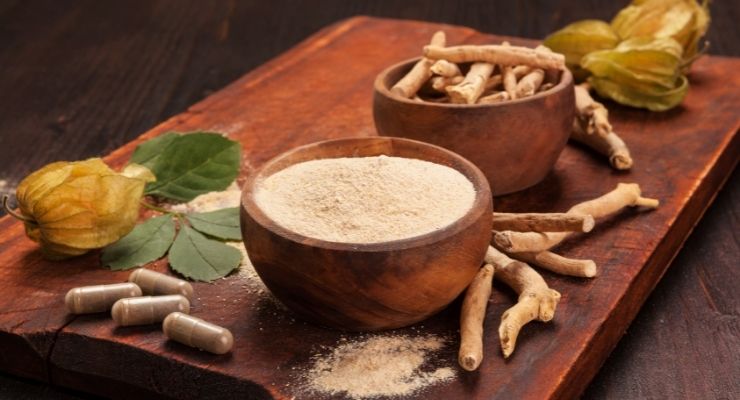
Adaptogens are a collection of plants and fungi that help promote the body’s resilience to stress, fatigue, and more. While research is still nascent, ashwagandha, ginseng (Panax), rhodiola, cordyceps, and eleuthero (Siberian ginseng) serve as the flagship ingredients of this emerging category.
“They’re thought to stimulate your body’s stress-protection response and help return it to a more balanced state,” said Meghan Wahlin, senior customer marketing manager at Glanbia Nutritionals. “For example, adaptogens may give you energy if you’re tired, or calm you down if you’re restless. That’s the beauty of these herbs—they meet you where you are at and offer true personalization. I think more research needs to be done on adaptogens and their possible health benefits, but it’s an exciting area.”
Found in ancient medicinal practices like Ayurveda and Traditional Chinese Medicine, many of these botanicals have been consumed in various forms by people for millennia. The historic tradition of use of these ingredients is a testament to their safety and quality, according to Kartikeya Baldwa, CEO of Ixoreal Biomed Inc., the supplier of KSM-66 Ashwagandha.
“But today’s market also demands clinical evidence to support traditional use,” he added. “At this point in time, the blending of both vast traditional and clinical evidence offers the greatest proof of efficacy and comfort to end users. Adaptogens offer an experience. They make people feel better, more vital, more alive. Thus, they not only deliver real benefits, but they also help to engender confidence in end users. This is good for the whole herbal category.”
Generally, experts concur that adaptogens can help level out fluctuations in markers of stress, such as cortisol. While each ingredient may have unique mechanisms of action, most are thought to provide homeostasis to one or more of the body’s stress responses.
The term “adaptogen” was coined by researchers in Russia who were seeking out a natural compound that could produce a “non-specific state of resistance” to physical, emotional, and environmental stress. However, scientists have expanded on this definition since.
“My assessment of the adaptogenic properties is based on older definitions going back to the initial terminology coined by Russian scientists,” said Stefan Gafner, chief scientific officer of the American Botanical Council. He pointed to a review published in Phytomedicine in 1999, which provides a robust analysis of the history of the term’s use in research, and ongoing iterations of the definition.1 “The definitions in there could be taken as an industry standard,” Gafner noted.
The authors of that review identified adaptogens as having a mode of action which targets the neuroendocrine system and regulates stimulus response. While scientific knowledge on these modes of action are limited, “it seems possible to define some most important ‘stress-markers’ for evaluation of efficacy of adaptogens,” the authors noted.
Adaptogens, according to the authors, could achieve a homeostasis between these “switch-on” and “switch-off” stress messengers in which the reactivity to stress improves in such a way that it better protects cells. “Adaptogens, thus defined, constitute a new class of metabolic regulators of natural origin which have been shown to increase the ability of the organism to adapt to environmental factors and to avoid damage to such factors.”
According to David Winston, RH(AHG), founder and president of Herbalist & Alchemist, later research would determine that adaptogens worked “by re-regulating two master control systems” in the body: the hypothalamic-pituitary-adrenal (HPA) axis, which regulates most endocrine function as well as many aspects of the nervous system, immune function, the enteric nervous system (gut-brain axis), cardiac and male and female reproductive function; and the sympathoadrenal system (SAS), which is a fight or flight response.
Further and more recent research by Dr. Alexander Pannossian, PhD, who Winston described as the foremost authority on adaptogens, revealed that “they also work on a cellular level, up-regulating stress-induced molecular chaperones (e.g., heat shock proteins, FOXO transcription factors, and neuropeptide Y), which act as ‘stress vaccines’ and prevent cortisol-induced mitochondrial dysfunction,” Winston said.
Even the most-researched adaptogens are quite complex, with much to uncover regarding their mechanisms of action, and are backed principally by observational data. So at this point, “there is no single piece of research that carries the day,” Baldwa said. “A rising tide lifts all boats; a constant stream of science will keep pushing adaptogens forward. The essential endpoints do not change. Reduced stress, better sleep, enhanced overall vitality, and improved mental sharpness are the primary outcomes.”
Gafner cited a paper published in 2021 that relied on focus groups of Australian Naturopaths to identify how they measure adaptogenic activity relative to the clinical outcomes they aim to achieve.2
“One of the challenging aspects of the adaptogenic concept is that there are so many different therapeutic areas that researchers look into to evaluate adaptogenic properties, including, but not limited to cognitive function, immune response and inflammation, physical endurance, and mood and anxiety,” Gafner said.
According to Winston, there are only nine herbs he believes can be considered adaptogens based on current research: ashwagandha, Asian and American ginseng, schisandra, rhodiola, cordyceps, shilajit, rhaponticum, and eleuthero.
“Other herbs that have some but less conclusive research, which we should refer to as ‘probable adaptogens,’ include holy basil, shatavari, cistanche (Rou Cong Rong), cynomorium (Suo Yang), and morinda (Ba Ji Tian),” he said.
Meanwhile, another dozen or so “possible adaptogens” that have relatively little evidence to support their application as such, include reishi, maca, the Chinese herb codonopsis (Dang Shen), Manchurian aralia, pseudostellaria (Prince Seng), jiaogulan, horny goat weed, and guduchi.
“Other herbs often mistakenly labeled as adaptogens are what I would call ‘restorative tonics’; they include amla, goji berry, astragalus, and processed rehmannia,” Winston said. “This last group of herbs—while highly effective and useful—simply do not meet the definition of an adaptogen.”
According to Research and Markets, the market for adaptogens is poised to reach $3.99 billion on a CAGR of 8.55% from 2020-2025. The market research firm reported that creative marketing strategies that build trust and awareness of ingredients will serve as key category drivers.
Ultimately, Baldwa said the efficacy of these products upon first use by consumers will be the strongest market driver. “The one sure thing about adaptogens is that they work,” he said. “This has driven popularity up to this point in time and will drive them more. Reduced stress, better sleep, enhanced overall vitality, and improved mental sharpness are always in-demand outcomes.”
Gafner noted two main drivers: “the ongoing COVID-19 pandemic and related situations of anxiety, stress, and fatigue certainly have made the use of adaptogens appealing. In addition, ‘adaptogen’ is a term that has been embraced by dietary supplement marketers, so this benefit claim is more widely used, and hence more people are becoming familiar with the word and its meaning.”
According to ABC’s 2021 Herb Market Report, ashwagandha had outpaced every other herbal supplement in terms of growth in U.S. mainstream channels, skyrocketing 185.2% in sales in 2020 to reach $31.7 million.
There’s also been substantial growth in the mushroom category in general.
According to the ABC Herb Market Report, in the U.S. natural channel, reishi mushrooms grew 22.7% to reach $4.49 million in 2020; chaga mushrooms grew 54.9% to reach $2.73 million; cordyceps mushrooms grew 25.7% to $3.48 million; and the other mushrooms category grew 41.8% to roughly $14.99 million.
Meanwhile, maca sales rose 21.8% to reach over $10 million in the U.S. mainstream channel, though sales contracted in the natural channel by -5.8% to $7.1 million.
High overall stress levels, sleep interruptions, and struggles to stay focused are specific concerns resonating with consumers.
“In many modern-human lives, daily stress has become normalized,” said Holly Johnson, chief science officer at the American Herbal Products Association (AHPA). “Both acute and long-term exposure to various stressors can lead to decreased physical and mental performance, and also stress-related illnesses including anxiety, depression, memory impairment, and hypertension, among others.”
Effective tools for managing stress, cognitive health, and mental wellbeing are “increasingly critical to our everyday existence,” she added. “Adaptogens also mediate immune response pathways; botanicals for maintaining a healthy immune system are popular currently and that category will continue to enjoy growth.”
When Winston published the first edition of his book, Adaptogens: Herbs for Strength, Stamina, and Stress Relief in 2007, the world was a very different place, and people’s health needs were different as well. An expanded and updated second edition of Winston’s book was published in 2019.
“Stress is now one of the primary conditions people seek to address because it undermines their physical and emotional health, and negatively impacts their quality of life,” Winston noted. “Over the last decade, as the benefits of adaptogens for stress-related conditions became more widely recognized due to increased research, demand for adaptogens grew quickly.”

For those focused on providing their customers with feelings of immediate efficacy, Winston noted that no botanical in this category is a one-size-fits-all solution. Adaptogens can be stimulating or calming, warming or cooling, moistening or drying, and nourishing or non-nourishing, he noted. “Not everyone needs an adaptogen. For instance, young, healthy people who are not under serious stress will often have little benefit.” Adaptogens may also work best when combined with what Winston called “companion herbs.”
“Depending on the person,” he said, “these could include nervines (nerve tonics) such as fresh milky oats, skullcap, lemon balm, and linden flower; nootropics (bacopa, rosemary, gotu kola, lavender, ginkgo); or restorative tonics (processed rehmannia, goji berry, polygonatum (Huang Jing), and amla).”
Proving an ingredient is suitable for a variety of categories, rather than simply focusing on a mainstay health category, can help to differentiate adaptogen products, according to Wahlin. For example, in sports nutrition, consumers often believe that “mental/emotional balance is just as important as physical health,” she said.
Many adaptogen-containing products are being launched in adjacent categories like immune support or other areas in which stress is a factor.
Formulators working in beverages or snack products may need to look beyond generic sweeteners and consider custom-tailored or proprietary flavor modifications. “Glanbia Nutritionals offers KSM-66 Ashwagandha powered by NutraShield technology to mask off flavors, allowing for higher ashwagandha inclusion rates in finished products,” Wahlin said.
“Exceptional application development and flavor technology can support inclusion of adaptogenic ingredients in just about any type of product,” added Corbin Hohl, research manager, bioactives, at Glanbia Nutritionals.
Naturally bitter notes found in many adaptogens can present formulation challenges, according to Thom King, CEO of alternative sweetener company Icon Foods. “However, the use of a sweetness modifier like thaumatin—derived from proteins within the katemfe fruit of West Africa—can overcome these challenges,” he said, noting that, with the right extract, sweetness can be achieved at low inclusion levels, sometimes below the level in which sweetness is perceived.
When it comes to optimizing the performance of an ingredient, suppliers may offer in-house expertise to aid in the product development process. “We have an applications team that works on formulations, especially for trendy things like gummies,” said Morales Garcia. “While these ingredients are versatile, they have strong flavors, but can definitely be customized. The smell and flavor of rhodiola is strong in our source material, but we can mask it with a range of different flavors depending on what’s popular at a given time. So, we like to be able to deliver the correct formulation to our customers who can then repeat it in their facilities, whereas other formulators might prefer to work with their own flavors.”
Debora Thoma, marketing manager for Nektium, said the company knows “many corners of phytochemistry,” including “how our ingredients interact with other elements inside a formulation, and where there is synergy. We also know which combinations this ingredient doesn’t match with, and how to overcome those challenges. We know some of the pain points in formulating with this material by doing it in-house, and many customers speak with our application team to find out what’s workable even before trying out a formulation.”
Formulators also need to be mindful of ingredient efficacy, and take a close look at the science to ensure clinical data is sufficient to support a label claim, Johnson noted.
“Stacking,” or formulating with multiple ingredients into a complex to offer a wider range of effects, could be a good springboard for some lesser-known ingredients, according to King. “Stress and/or anxiety relief stacks have included ashwagandha, tulsi, ginseng, rhodiola, and astragalus.” he noted. “This combination has gained popularity but requires a lot of fancy footwork to cover off-notes, which can come in the form of masking or flavor modulation.”
Expect product developers to become more exploratory when it comes to using fungi to complement well-established plants that have stress-resistance benefits, he added.
“Lion’s mane, reishi, chaga, cordyceps, and turkey tail all play adaptogenic roles. I see these growing in popularity, and all of them come with flavor challenges that require the right sweetening systems, masking, and flavor modulation,” King said.
With plant matter, consistency is a special challenge, according to David Law, CEO of Gourmet Mushrooms, Inc. “A product should be produced with a strict protocol using consistent, quality ingredients. The formulations should have analytical fingerprints such as high-performance thin-layer chromatography (HPTLC) graphs to show batch consistency.”
“This is a difficult area that requires a lot of consumer education,” Law said. “The certifications and standards will help, but effective and efficient dissemination of information will be a major challenge.”
While certain subsets of consumers may be educated and informed on sustainability and quality credentials, “mainstream consumers have little to no understanding of these standards,” Hohl concurred.
Gafner also noted confusion about various certifications and quality standards among consumers. “I always tell people to pick products that have been clinically tested or select companies that have made substantial investments in research. But it’s not easy for consumers to find such information without having some background in science.”
From an industry perspective, Gafner suggested companies invest more in research, and be as transparent as possible. “There are companies that have QR codes on their labels where a consumer can find information about where the plant is grown and how it is processed. The same can be done with quality control information—but it has to be done in a way that is accessible to the consumer.” And ultimately, consumers need to trust the information the company provides is accurate, he added.
Industry stakeholders need to be vigilant about economically-motivated adulteration, which often increases when an ingredient or category gains popularity, when supply chains are stressed, and prices rise.
Alongside ABC, the American Herbal Pharmacopoeia (AHP) and the University of Mississippi’s National Center for Natural Products Research (NCNPR) have developed a large scale program to educate members of the herbal and dietary supplement industry about ingredient and product adulteration. The ABC-AHP-NCNPR Botanical Adulterants Prevention Program (BAPP) publishes peer-reviewed articles, bulletins, newsletters, and laboratory guidance documents as a free public service.
“From what I understand, the biggest challenges with regards to sustainable harvest are seen for rhodiola root and eleuthero root,” Gafner said of the adaptogens category. “Some of the volume of these two plants can be obtained from cultivation, but as long as the prices for wild-harvested roots are lower, suppliers will use the lower-cost materials to be more competitive on pricing. China is the main supplier for both rhodiola and eleuthero roots, but quite often, the roots are now smuggled in from neighboring Russia. Additionally, the dwindling resources in the wild have led to substitution with closely related species in both cases, often unbeknownst to the buyer. I don’t think that these issues will be disappearing in the short term.”
A key strategy for ensuring consistent, high-quality supply is establishing long-term, committed relationships with suppliers, Johnson said, “and maintaining strong supplier and ingredient qualification programs when creating sourcing partnerships and onboarding new ingredients. Supply chain issues, availability, and volume, as well as sustainability concerns are also paramount and should be considered when creating new formulas and sourcing and qualifying materials.”
In the face of quality concerns, sustainability challenges, and application expertise, vertically-integrated supply chains may offer an advantage, according to Morales Garcia. “We’re a relatively small player in the industry, but our advantage is that we have all of our facilities and departments under one roof, except for the sourcing of some raw material. This helps us be very agile in dealing with daily business operations and new formulations.”
Adriana Redigor Garcia, corporate strategy and innovation manager for Nektium, noted the partnership for its rhodiola supply has lasted 25 years, “and that has had a big impact on our relationship with customers and the quality of our raw material. Just as important to this sustainability is that we can ensure good agricultural practices are taking place and people involved in the cultivation are given fair salaries. We ultimately want the values of our customers and raw material suppliers to be aligned.”
References
1. Panossian, A. et al. (1999). Plant Adaptogens III. Earlier and more recent aspects and concepts on their mode of action. Phytomedicine. Oct;6(4):287-300. doi: 10.1016/S0944-7113(99)80023-3
2. Gerontakos, S. et al. (2021). Clinician perspectives and understanding of the adaptogenic concept: A focus group study with Naturopaths and Western Herbalists. Integrative Medicine Research. Mar;10(1):100433. doi: 10.1016/j.imr.2020.100433
“They’re thought to stimulate your body’s stress-protection response and help return it to a more balanced state,” said Meghan Wahlin, senior customer marketing manager at Glanbia Nutritionals. “For example, adaptogens may give you energy if you’re tired, or calm you down if you’re restless. That’s the beauty of these herbs—they meet you where you are at and offer true personalization. I think more research needs to be done on adaptogens and their possible health benefits, but it’s an exciting area.”
Found in ancient medicinal practices like Ayurveda and Traditional Chinese Medicine, many of these botanicals have been consumed in various forms by people for millennia. The historic tradition of use of these ingredients is a testament to their safety and quality, according to Kartikeya Baldwa, CEO of Ixoreal Biomed Inc., the supplier of KSM-66 Ashwagandha.
“But today’s market also demands clinical evidence to support traditional use,” he added. “At this point in time, the blending of both vast traditional and clinical evidence offers the greatest proof of efficacy and comfort to end users. Adaptogens offer an experience. They make people feel better, more vital, more alive. Thus, they not only deliver real benefits, but they also help to engender confidence in end users. This is good for the whole herbal category.”
What are Adaptogens?
The term “adaptogen” has been expanded upon by phytomedicine researchers for decades, and has become a major buzzword in dietary supplement marketing today. For this reason, there’s a range of opinion as to which ingredients may qualify, and there is no universally agreed upon definition.Generally, experts concur that adaptogens can help level out fluctuations in markers of stress, such as cortisol. While each ingredient may have unique mechanisms of action, most are thought to provide homeostasis to one or more of the body’s stress responses.
The term “adaptogen” was coined by researchers in Russia who were seeking out a natural compound that could produce a “non-specific state of resistance” to physical, emotional, and environmental stress. However, scientists have expanded on this definition since.
“My assessment of the adaptogenic properties is based on older definitions going back to the initial terminology coined by Russian scientists,” said Stefan Gafner, chief scientific officer of the American Botanical Council. He pointed to a review published in Phytomedicine in 1999, which provides a robust analysis of the history of the term’s use in research, and ongoing iterations of the definition.1 “The definitions in there could be taken as an industry standard,” Gafner noted.
The authors of that review identified adaptogens as having a mode of action which targets the neuroendocrine system and regulates stimulus response. While scientific knowledge on these modes of action are limited, “it seems possible to define some most important ‘stress-markers’ for evaluation of efficacy of adaptogens,” the authors noted.
Adaptogens, according to the authors, could achieve a homeostasis between these “switch-on” and “switch-off” stress messengers in which the reactivity to stress improves in such a way that it better protects cells. “Adaptogens, thus defined, constitute a new class of metabolic regulators of natural origin which have been shown to increase the ability of the organism to adapt to environmental factors and to avoid damage to such factors.”
According to David Winston, RH(AHG), founder and president of Herbalist & Alchemist, later research would determine that adaptogens worked “by re-regulating two master control systems” in the body: the hypothalamic-pituitary-adrenal (HPA) axis, which regulates most endocrine function as well as many aspects of the nervous system, immune function, the enteric nervous system (gut-brain axis), cardiac and male and female reproductive function; and the sympathoadrenal system (SAS), which is a fight or flight response.
Further and more recent research by Dr. Alexander Pannossian, PhD, who Winston described as the foremost authority on adaptogens, revealed that “they also work on a cellular level, up-regulating stress-induced molecular chaperones (e.g., heat shock proteins, FOXO transcription factors, and neuropeptide Y), which act as ‘stress vaccines’ and prevent cortisol-induced mitochondrial dysfunction,” Winston said.
Even the most-researched adaptogens are quite complex, with much to uncover regarding their mechanisms of action, and are backed principally by observational data. So at this point, “there is no single piece of research that carries the day,” Baldwa said. “A rising tide lifts all boats; a constant stream of science will keep pushing adaptogens forward. The essential endpoints do not change. Reduced stress, better sleep, enhanced overall vitality, and improved mental sharpness are the primary outcomes.”
Applying the Concept
There are many health benefits to which the adaptogenic concept may apply. “You can really narrow things down by ingredient depending on what kind of health claim you’re looking for,” said Raúl Morales Garcia, business development manager for Nektium Pharma. “While adaptogens help make stress responses less pronounced in a non-specific way, things can be narrowed down to sports performance, stress management, and more by research which looks at specific markers. Some energizing adaptogens like rhodiola might be wanted as endurance ingredients, where ashwagandha is more attributed to relaxation and stress relief. Meanwhile, ginseng is shown to have an influence on immunity. So, lean into what scientific literature is out there.”Gafner cited a paper published in 2021 that relied on focus groups of Australian Naturopaths to identify how they measure adaptogenic activity relative to the clinical outcomes they aim to achieve.2
“One of the challenging aspects of the adaptogenic concept is that there are so many different therapeutic areas that researchers look into to evaluate adaptogenic properties, including, but not limited to cognitive function, immune response and inflammation, physical endurance, and mood and anxiety,” Gafner said.
According to Winston, there are only nine herbs he believes can be considered adaptogens based on current research: ashwagandha, Asian and American ginseng, schisandra, rhodiola, cordyceps, shilajit, rhaponticum, and eleuthero.
“Other herbs that have some but less conclusive research, which we should refer to as ‘probable adaptogens,’ include holy basil, shatavari, cistanche (Rou Cong Rong), cynomorium (Suo Yang), and morinda (Ba Ji Tian),” he said.
Meanwhile, another dozen or so “possible adaptogens” that have relatively little evidence to support their application as such, include reishi, maca, the Chinese herb codonopsis (Dang Shen), Manchurian aralia, pseudostellaria (Prince Seng), jiaogulan, horny goat weed, and guduchi.
“Other herbs often mistakenly labeled as adaptogens are what I would call ‘restorative tonics’; they include amla, goji berry, astragalus, and processed rehmannia,” Winston said. “This last group of herbs—while highly effective and useful—simply do not meet the definition of an adaptogen.”
An Attractive Market
Over the past few years, the adaptogens market has benefited from rising interest in dietary supplements and ingredients that have functional applications beyond simply meeting daily nutritional requirements.According to Research and Markets, the market for adaptogens is poised to reach $3.99 billion on a CAGR of 8.55% from 2020-2025. The market research firm reported that creative marketing strategies that build trust and awareness of ingredients will serve as key category drivers.
Ultimately, Baldwa said the efficacy of these products upon first use by consumers will be the strongest market driver. “The one sure thing about adaptogens is that they work,” he said. “This has driven popularity up to this point in time and will drive them more. Reduced stress, better sleep, enhanced overall vitality, and improved mental sharpness are always in-demand outcomes.”
Gafner noted two main drivers: “the ongoing COVID-19 pandemic and related situations of anxiety, stress, and fatigue certainly have made the use of adaptogens appealing. In addition, ‘adaptogen’ is a term that has been embraced by dietary supplement marketers, so this benefit claim is more widely used, and hence more people are becoming familiar with the word and its meaning.”
According to ABC’s 2021 Herb Market Report, ashwagandha had outpaced every other herbal supplement in terms of growth in U.S. mainstream channels, skyrocketing 185.2% in sales in 2020 to reach $31.7 million.
There’s also been substantial growth in the mushroom category in general.
According to the ABC Herb Market Report, in the U.S. natural channel, reishi mushrooms grew 22.7% to reach $4.49 million in 2020; chaga mushrooms grew 54.9% to reach $2.73 million; cordyceps mushrooms grew 25.7% to $3.48 million; and the other mushrooms category grew 41.8% to roughly $14.99 million.
Meanwhile, maca sales rose 21.8% to reach over $10 million in the U.S. mainstream channel, though sales contracted in the natural channel by -5.8% to $7.1 million.
Under Pressure
Widespread reported feelings of stress in the U.S. don’t appear likely to decline anytime soon. According to the American Psychological Association’s (APA) 2022 “Stress in America” survey, the lion’s share of Americans are stressed by inflationary pricing (87%), supply chain issues (81%), global uncertainty (81%), and both the Russian invasion of Ukraine and potential retaliation from Russia (80%).High overall stress levels, sleep interruptions, and struggles to stay focused are specific concerns resonating with consumers.
“In many modern-human lives, daily stress has become normalized,” said Holly Johnson, chief science officer at the American Herbal Products Association (AHPA). “Both acute and long-term exposure to various stressors can lead to decreased physical and mental performance, and also stress-related illnesses including anxiety, depression, memory impairment, and hypertension, among others.”
Effective tools for managing stress, cognitive health, and mental wellbeing are “increasingly critical to our everyday existence,” she added. “Adaptogens also mediate immune response pathways; botanicals for maintaining a healthy immune system are popular currently and that category will continue to enjoy growth.”
When Winston published the first edition of his book, Adaptogens: Herbs for Strength, Stamina, and Stress Relief in 2007, the world was a very different place, and people’s health needs were different as well. An expanded and updated second edition of Winston’s book was published in 2019.
“Stress is now one of the primary conditions people seek to address because it undermines their physical and emotional health, and negatively impacts their quality of life,” Winston noted. “Over the last decade, as the benefits of adaptogens for stress-related conditions became more widely recognized due to increased research, demand for adaptogens grew quickly.”
Hallmarks of Success
While the adaptogens market may be relatively small, it is growing in popularity, and competition requires that products are backed by high-quality research and standards. Both finished product companies and more savvy consumers want research to demonstrate clear benefits.For those focused on providing their customers with feelings of immediate efficacy, Winston noted that no botanical in this category is a one-size-fits-all solution. Adaptogens can be stimulating or calming, warming or cooling, moistening or drying, and nourishing or non-nourishing, he noted. “Not everyone needs an adaptogen. For instance, young, healthy people who are not under serious stress will often have little benefit.” Adaptogens may also work best when combined with what Winston called “companion herbs.”
“Depending on the person,” he said, “these could include nervines (nerve tonics) such as fresh milky oats, skullcap, lemon balm, and linden flower; nootropics (bacopa, rosemary, gotu kola, lavender, ginkgo); or restorative tonics (processed rehmannia, goji berry, polygonatum (Huang Jing), and amla).”
Proving an ingredient is suitable for a variety of categories, rather than simply focusing on a mainstay health category, can help to differentiate adaptogen products, according to Wahlin. For example, in sports nutrition, consumers often believe that “mental/emotional balance is just as important as physical health,” she said.
Many adaptogen-containing products are being launched in adjacent categories like immune support or other areas in which stress is a factor.
Tomorrow’s Formulas
While some adaptogens have culinary uses, the vast majority are notorious for earthy and bitter notes. This creates challenges for on-trend delivery formats that can’t mask tastes the way that encapsulation might.Formulators working in beverages or snack products may need to look beyond generic sweeteners and consider custom-tailored or proprietary flavor modifications. “Glanbia Nutritionals offers KSM-66 Ashwagandha powered by NutraShield technology to mask off flavors, allowing for higher ashwagandha inclusion rates in finished products,” Wahlin said.
“Exceptional application development and flavor technology can support inclusion of adaptogenic ingredients in just about any type of product,” added Corbin Hohl, research manager, bioactives, at Glanbia Nutritionals.
Naturally bitter notes found in many adaptogens can present formulation challenges, according to Thom King, CEO of alternative sweetener company Icon Foods. “However, the use of a sweetness modifier like thaumatin—derived from proteins within the katemfe fruit of West Africa—can overcome these challenges,” he said, noting that, with the right extract, sweetness can be achieved at low inclusion levels, sometimes below the level in which sweetness is perceived.
When it comes to optimizing the performance of an ingredient, suppliers may offer in-house expertise to aid in the product development process. “We have an applications team that works on formulations, especially for trendy things like gummies,” said Morales Garcia. “While these ingredients are versatile, they have strong flavors, but can definitely be customized. The smell and flavor of rhodiola is strong in our source material, but we can mask it with a range of different flavors depending on what’s popular at a given time. So, we like to be able to deliver the correct formulation to our customers who can then repeat it in their facilities, whereas other formulators might prefer to work with their own flavors.”
Debora Thoma, marketing manager for Nektium, said the company knows “many corners of phytochemistry,” including “how our ingredients interact with other elements inside a formulation, and where there is synergy. We also know which combinations this ingredient doesn’t match with, and how to overcome those challenges. We know some of the pain points in formulating with this material by doing it in-house, and many customers speak with our application team to find out what’s workable even before trying out a formulation.”
Formulators also need to be mindful of ingredient efficacy, and take a close look at the science to ensure clinical data is sufficient to support a label claim, Johnson noted.
“Stacking,” or formulating with multiple ingredients into a complex to offer a wider range of effects, could be a good springboard for some lesser-known ingredients, according to King. “Stress and/or anxiety relief stacks have included ashwagandha, tulsi, ginseng, rhodiola, and astragalus.” he noted. “This combination has gained popularity but requires a lot of fancy footwork to cover off-notes, which can come in the form of masking or flavor modulation.”
Expect product developers to become more exploratory when it comes to using fungi to complement well-established plants that have stress-resistance benefits, he added.
“Lion’s mane, reishi, chaga, cordyceps, and turkey tail all play adaptogenic roles. I see these growing in popularity, and all of them come with flavor challenges that require the right sweetening systems, masking, and flavor modulation,” King said.
With plant matter, consistency is a special challenge, according to David Law, CEO of Gourmet Mushrooms, Inc. “A product should be produced with a strict protocol using consistent, quality ingredients. The formulations should have analytical fingerprints such as high-performance thin-layer chromatography (HPTLC) graphs to show batch consistency.”
Quality, Transparency, Sustainability
There’s still progress to be made in terms of educating consumers about adaptogens, and other botanical categories, including differences in quality, transparency, and sustainability.“This is a difficult area that requires a lot of consumer education,” Law said. “The certifications and standards will help, but effective and efficient dissemination of information will be a major challenge.”
While certain subsets of consumers may be educated and informed on sustainability and quality credentials, “mainstream consumers have little to no understanding of these standards,” Hohl concurred.
Gafner also noted confusion about various certifications and quality standards among consumers. “I always tell people to pick products that have been clinically tested or select companies that have made substantial investments in research. But it’s not easy for consumers to find such information without having some background in science.”
From an industry perspective, Gafner suggested companies invest more in research, and be as transparent as possible. “There are companies that have QR codes on their labels where a consumer can find information about where the plant is grown and how it is processed. The same can be done with quality control information—but it has to be done in a way that is accessible to the consumer.” And ultimately, consumers need to trust the information the company provides is accurate, he added.
Industry stakeholders need to be vigilant about economically-motivated adulteration, which often increases when an ingredient or category gains popularity, when supply chains are stressed, and prices rise.
Alongside ABC, the American Herbal Pharmacopoeia (AHP) and the University of Mississippi’s National Center for Natural Products Research (NCNPR) have developed a large scale program to educate members of the herbal and dietary supplement industry about ingredient and product adulteration. The ABC-AHP-NCNPR Botanical Adulterants Prevention Program (BAPP) publishes peer-reviewed articles, bulletins, newsletters, and laboratory guidance documents as a free public service.
“From what I understand, the biggest challenges with regards to sustainable harvest are seen for rhodiola root and eleuthero root,” Gafner said of the adaptogens category. “Some of the volume of these two plants can be obtained from cultivation, but as long as the prices for wild-harvested roots are lower, suppliers will use the lower-cost materials to be more competitive on pricing. China is the main supplier for both rhodiola and eleuthero roots, but quite often, the roots are now smuggled in from neighboring Russia. Additionally, the dwindling resources in the wild have led to substitution with closely related species in both cases, often unbeknownst to the buyer. I don’t think that these issues will be disappearing in the short term.”
A key strategy for ensuring consistent, high-quality supply is establishing long-term, committed relationships with suppliers, Johnson said, “and maintaining strong supplier and ingredient qualification programs when creating sourcing partnerships and onboarding new ingredients. Supply chain issues, availability, and volume, as well as sustainability concerns are also paramount and should be considered when creating new formulas and sourcing and qualifying materials.”
In the face of quality concerns, sustainability challenges, and application expertise, vertically-integrated supply chains may offer an advantage, according to Morales Garcia. “We’re a relatively small player in the industry, but our advantage is that we have all of our facilities and departments under one roof, except for the sourcing of some raw material. This helps us be very agile in dealing with daily business operations and new formulations.”
Adriana Redigor Garcia, corporate strategy and innovation manager for Nektium, noted the partnership for its rhodiola supply has lasted 25 years, “and that has had a big impact on our relationship with customers and the quality of our raw material. Just as important to this sustainability is that we can ensure good agricultural practices are taking place and people involved in the cultivation are given fair salaries. We ultimately want the values of our customers and raw material suppliers to be aligned.”
References
1. Panossian, A. et al. (1999). Plant Adaptogens III. Earlier and more recent aspects and concepts on their mode of action. Phytomedicine. Oct;6(4):287-300. doi: 10.1016/S0944-7113(99)80023-3
2. Gerontakos, S. et al. (2021). Clinician perspectives and understanding of the adaptogenic concept: A focus group study with Naturopaths and Western Herbalists. Integrative Medicine Research. Mar;10(1):100433. doi: 10.1016/j.imr.2020.100433